
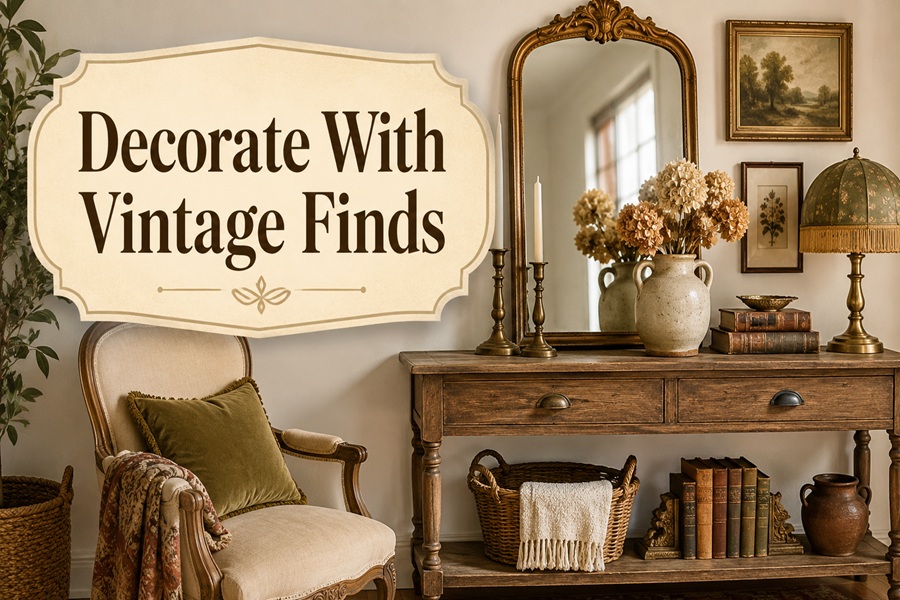
There are two fears that stop people from decorating with vintage finds. One: the house ends up looking like a museum. Two: it looks like a junk shop.
Both are avoidable. The difference isn’t the pieces you buy. It’s the ratio, the condition, and the way you style them.
This guide walks through all three, plus where to shop and how to spot a fake.
Quick answer: To decorate with vintage finds, mix mostly modern pieces with a few well-chosen old ones, anchor each room with one statement piece, check condition before buying, and repeat one material (like brass or wood) across the room for cohesion.
What Counts as a Vintage Find?
The words get used loosely, so here’s the line most dealers draw.
| Term | Typical Age | What It Means |
|---|---|---|
| Vintage | 40+ years | Old enough to feel of another era, still usable |
| Antique | 100+ years | Genuinely historic, often more valuable |
| Retro | Newer | Made recently in an older style |
| Thrifted | Any age | Simply secondhand, vintage or not |
In practice, plenty of items get labelled “vintage” that are much younger. That’s fine. For decorating, the feel matters more than the exact date.
What’s the Right Ratio of Old to New?
Here’s the single most useful rule, and one most articles leave vague. Aim for roughly 70% modern, 30% vintage in any room.
That ratio keeps a space feeling current and lived-in. Go much higher on vintage and the room drifts toward “museum.” Go much lower and the old pieces lose their impact.
Two exceptions:
- If you love a full period look (English cottage, farmhouse), a higher vintage share is a deliberate choice, not a mistake.
- In a very modern build, even 10–15% vintage adds all the warmth you need.
The point isn’t the exact number. It’s that vintage should punctuate a room, not fill it.
How Do You Start Decorating With Vintage Finds?
Start small. This is the advice thrifting communities on Reddit and designers in outlets like Real Simple repeat most often.
- Build a vignette first. A pair of vintage candlesticks on a stack of old books. One small grouping teaches you how to style before you commit to big pieces.
- Pick one anchor per room. A gilded mirror, a farmhouse table, or a midcentury credenza can become the focal point and instantly set the tone.
- Give antiques room to breathe. Crowding kills them. Space lets an old piece read as intentional, not accidental.
If you’re unsure, books, clocks, and small ceramics are the lowest-risk way to add vintage character to a shelf.
Where Do You Find Good Vintage Pieces?
Different sources suit different goals and budgets.
| Source | Best For | Watch Out For |
|---|---|---|
| Estate sales | Whole-home hauls, fair prices | Early crowds, cash-only |
| Flea markets | Variety, haggling | Condition varies wildly |
| Antique stores | Curated, verified pieces | Higher prices |
| Habitat ReStore / charity shops | Bargains, furniture | Hit or miss stock |
| Facebook Marketplace | Local big items | Meet safely, inspect first |
| Your own attic | Free, sentimental | You forget what’s up there |
A budget tip designers swear by: go early and go often. Most stores restock overnight, so arriving first gives you first pick. Persistence beats luck.
How Do You Check a Vintage Find’s Condition Before Buying?
This is where beginners lose money. A cheap piece that needs €200 of repair isn’t cheap. Run this checklist before you buy.
- Smell it. Musty or smoke odors soak into wood and fabric and rarely fully leave.
- Check for stability. Wobble chairs and tables. Loose joints mean repair work.
- Look for water rings, cracks, and active woodworm (small holes with fresh dust).
- Use your phone’s flashlight across upholstery to catch stains and wear.
- Test drawers and doors. They should open smoothly.
- Avoid appliances you can’t test. Vintage electricals are a common regret.
A pro trick most guides skip: carry a small UV/black light. It reveals hidden stains, repairs, and glue that normal light hides. Useful for glass, ceramics, and linens.
How Do You Spot a Reproduction?
Reproductions get sold as vintage constantly. Quick tells:
- Too perfect. Genuine age brings small, uneven wear. Flawless “old” pieces are suspect.
- Modern screws or fittings on “antique” furniture.
- Printed grain or wear instead of real patina.
- Weight. Old solid wood and metal usually feel heavier than modern copies.
When a deal feels too good, check comparable sold prices online before committing.
How Do You Style Vintage Finds So They Don’t Look Dated?
The goal isn’t a period set. It’s a layered, personal space. These moves keep vintage feeling fresh.
- Mix eras and old with new. A weathered sideboard under sleek modern art. A vintage mirror over a new vanity. Contrast is what makes each piece pop.
- Repeat one material. Thread brass, wood, or ironstone through a room and the whole mix suddenly feels cohesive. This is the quiet secret behind rooms that “just work.”
- Curate a collection. Group like items (glassware, ceramics, books) in one color family for instant visual unity on open shelving.
- Use pieces in unexpected ways. An old sewing-machine base as an entry table. A ladder as a blanket rack. Plates, quilts, and trays hung as wall art.
How Do You Decorate Each Room With Vintage Finds?
A quick room-by-room starting point:
- Living room: One anchor (mirror, credenza, or trunk), plus a vintage rug to ground the space.
- Kitchen: Ironstone, copper pots, and mixing bowls on open shelves. Useful and decorative.
- Bedroom: A vintage headboard or dresser, softened with layered textiles.
- Bathroom: A small antique mirror or apothecary jars for character in a modern space.
- Entryway: A repurposed table and a bowl or tray to set the tone as people walk in.
What Vintage Decorating Mistakes Make a Home Look Old?
The irony: bad vintage styling ages a home faster than no vintage at all. Designers flag these most often.
- Dated thrift-store lamps. Fussy brass bases and pleated shades pull a room backward.
- Rugs that are too small. Furniture floating around a tiny rug reads instantly dated.
- Overly matchy sets. A room where everything is the same era looks staged.
- Too much at once. Every surface covered signals “resale shop,” not “curated.”
- Project pieces you’ll never fix. If it needs major work, be honest about whether you’ll do it.
Why Is Decorating With Vintage Finds Worth It?
Beyond the look, three real reasons.
- Quality. Older furniture was often built to last, unlike much disposable modern furniture.
- Sustainability. Reusing pieces keeps them out of landfill and cuts demand for new production. This matters more to buyers every year.
- Character. A piece with history adds a story and a one-of-a-kind feel that mass-market decor can’t fake.
Frequently Asked Questions
Can you mix vintage finds with modern furniture?
Yes, and you should. A roughly 70/30 modern-to-vintage mix keeps a room current while giving old pieces room to stand out.
How much vintage is too much in one room?
When a space starts reading as a period set or a shop, it’s too much. Vintage should punctuate a room, not fill it, unless a full period look is your deliberate goal.
What’s the difference between vintage and antique?
Vintage is usually 40+ years old; antique is 100+ years old. Antiques are often more valuable, but for decorating, either works.
How do I keep vintage finds from looking dated?
Mix eras, pair old with new, repeat one material like brass or wood for cohesion, and use a modern rug and lighting to keep things current.
Where’s the cheapest place to find vintage decor?
Charity shops, Habitat ReStore, and estate sales tend to have the best prices. Arrive early and visit often for the best pick.
Is decorating with vintage finds sustainable?
Yes. Reusing pieces reduces waste and demand for new manufacturing, which is a big part of why the look keeps trending.