
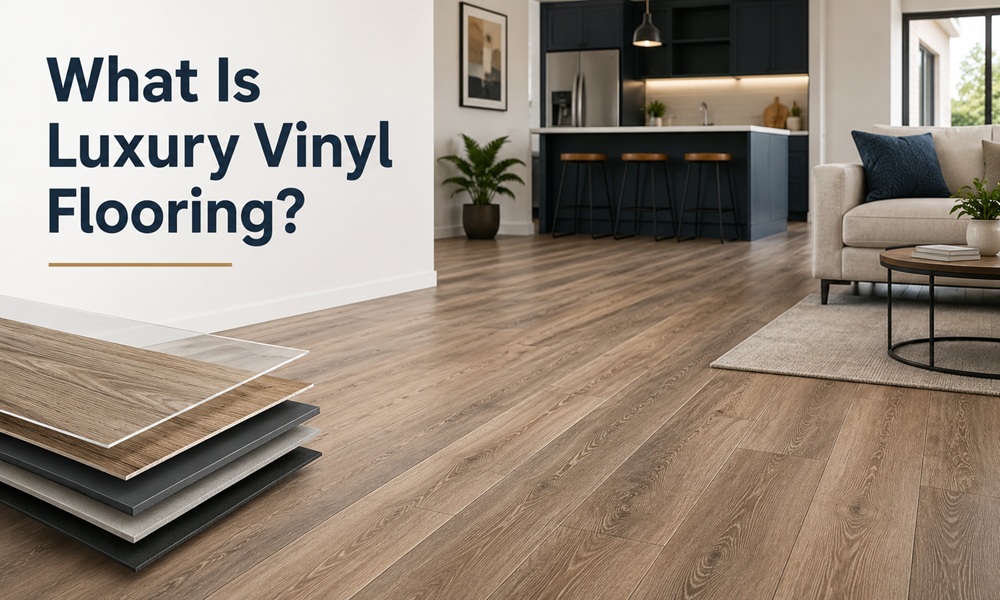
Luxury vinyl flooring is now the fastest-growing floor category in North America. Yet the label hides four very different products. Understanding the layers, and the core in particular, is the difference between a floor that lasts 20 years and one that peaks in three.
What is luxury vinyl flooring made of?
Every luxury vinyl floor is built from four stacked layers.
- Backing layer. The base. On rigid products it may include a pre-attached underlayment for cushioning and sound.
- Core layer. The structural middle. This is where LVP, WPC, and SPC split apart.
- Printed film (design layer). A high-resolution photo of wood grain, stone, or tile.
- Wear layer. A clear urethane coat measured in mils. It absorbs scratches, scuffs, and foot traffic.
The wear layer is the single most important spec buyers ignore. A 6-mil layer suits a guest bedroom. A 20-mil layer survives a kitchen with dogs and kids.
What is the difference between LVP and LVT?
The shape is the only real difference.
- LVP (luxury vinyl plank) comes in long, narrow boards and mimics hardwood.
- LVT (luxury vinyl tile) comes in squares or large-format rectangles and mimics stone, marble, slate, or ceramic.
Both use the same core technologies. LVP tends to cost slightly more because a convincing wood look is harder to print, and buyers pay a premium for hardwood aesthetics.
What do SPC and WPC actually mean?
This is where most confusion lives. SPC and WPC are core types, not separate flooring categories. Both plank and tile products can use either core.
| Core type | What it is | Feel underfoot | Best for |
|---|---|---|---|
| Standard (flexible) LVP | Flexible PVC core | Thin, follows the subfloor | Low-moisture, flat rooms, tight budgets |
| WPC (wood-plastic composite) | Foamed wood-polymer core | Softer, warmer, quieter | Bedrooms, living rooms, comfort-first spaces |
| SPC (stone-plastic composite) | Dense stone-polymer core | Harder, very rigid, stable | Basements, sunrooms, wide temperature swings |
SPC dominates the market today. Its density makes it the most dimensionally stable option, meaning it barely expands or contracts when a sunroom heats up. WPC trades a little stability for a plusher, quieter step.
Insider distinction rarely stated in top guides: SPC hides subfloor imperfections better than flexible LVP because its rigid core bridges small dips instead of telegraphing them upward. That is why flooring pros on Reddit’s flooring communities repeatedly steer beginners toward rigid-core over cheap flexible planks for a first DIY install.
How much does luxury vinyl flooring cost?
Two variables move the price more than anything else: wear-layer thickness and core construction.
| Tier | Materials (per sq ft) | What you get |
|---|---|---|
| Budget | $1.50 to $3 | 6 to 8 mil wear layer, thin core |
| Mid-range | $3 to $5 | 12 to 20 mil wear layer, rigid core |
| Premium | $5 to $8+ | 20+ mil wear layer, wide planks, registered embossing |
Installation adds roughly $1 to $3 per square foot for a simple floating click-lock install, and more for glue-down, herringbone, or a subfloor that needs leveling. A standard 200-square-foot room usually lands between $800 and $1,400 for mid-range plank with professional installation.
For scale: the global LVP market was valued at $51.7 billion in 2023 and is projected to reach $101.1 billion by 2032, per Allied Market Research. That growth is why quality has climbed at every price point.
Hidden cost buyers miss
Many mid-tier planks still need a separate underlayment pad for cushioning and sound dampening. Budget $0.25 to $1 per square foot if yours does not include attached underlayment. Products with pre-attached backing remove that line item entirely.
Is luxury vinyl flooring actually waterproof?
Rigid-core (SPC and WPC) products are waterproof at the plank level. The vinyl itself will not swell or rot in standing water.
The vulnerable point is the seams and the subfloor beneath. Water can still seep through gaps into a wood subfloor if a spill sits for days. So “waterproof floor” does not mean “waterproof room.” Wipe standing water and seal perimeter gaps in bathrooms.
Luxury vinyl vs hardwood: which is the better value?
Recent cost studies put vinyl plank at roughly 30 to 50 percent less than hardwood in combined materials and labor. Vinyl also wins on moisture, scratch resistance, and DIY-friendly click installation.
Hardwood wins on two counts that matter for resale: it can be sanded and refinished many times over a century of life, and appraisers and buyers still value real wood. Vinyl cannot be refinished. When the wear layer is gone, the plank is replaced.
The honest summary: luxury vinyl is the better performance-per-dollar floor for wet rooms, basements, and high-traffic family spaces. Hardwood remains the better long-horizon investment in formal living areas of higher-value homes.
How long does luxury vinyl flooring last?
- Budget flexible LVP: 5 to 10 years in a busy home.
- Mid-range rigid core with a 12 to 20 mil wear layer: 15 to 20 years.
- Premium 20+ mil SPC: 20 to 25 years or more with light traffic.
Warranties often quote longer figures, but those assume light residential use and correct installation. The wear layer, not the marketing number, is your real durability gauge.
Quick buyer checklist
- Match wear layer to traffic: 12 mil minimum for a family, 20 mil for kitchens and entries.
- Choose SPC for basements, sunrooms, and uneven subfloors.
- Choose WPC where quiet and softness matter more than stability.
- Confirm whether underlayment is attached or a separate cost.
- Seal perimeter gaps in bathrooms even with a waterproof plank.
FAQ
Is luxury vinyl the same as laminate?
No. Laminate has a fiberboard core that swells when wet. Luxury vinyl has a plastic-based core that does not.
Can luxury vinyl go over existing tile?
Yes, if the tile is flat and grout lines are shallow. Rigid SPC bridges minor grout lines better than flexible planks.
Does luxury vinyl add resale value?
It rarely adds value the way hardwood can, but new, well-installed vinyl reads as a clean, move-in-ready upgrade over worn carpet or dated tile.