
Most people don’t scratch their hardwood floors on purpose. They wear the finish down slowly, one wrong mop at a time.
The finish is the thin protective layer that keeps water out and the shine in. Once it thins, refinishing is the only fix. And refinishing is expensive.
This guide shows you how to clean hardwood floors the way flooring pros do it: by finish type, with the right amount of moisture, and without the habits that quietly damage the wood underneath.
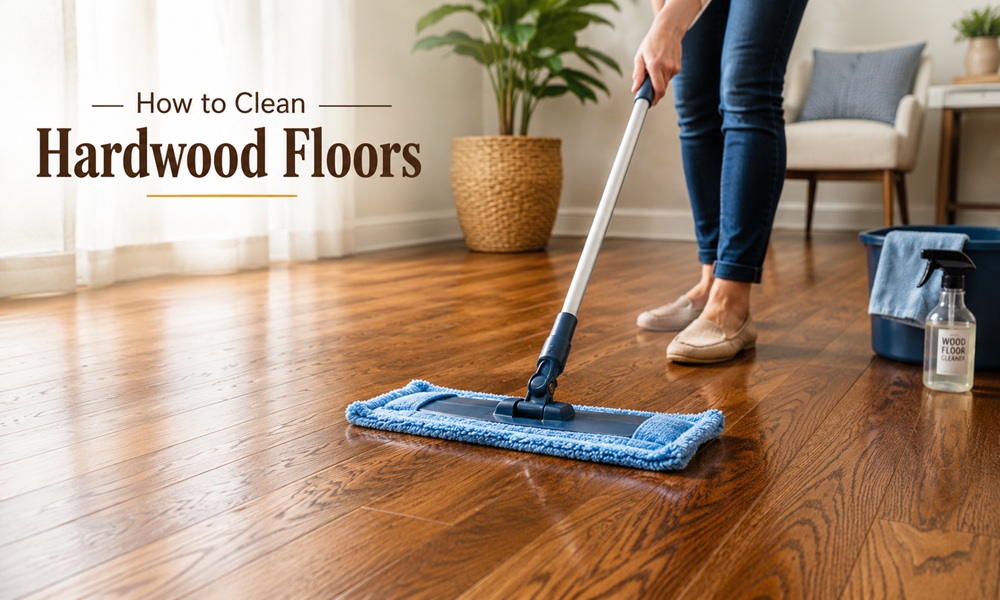
Quick answer: To clean hardwood floors safely, remove grit first with a soft broom or a vacuum on hard-floor mode, then damp-mop with a flat microfiber pad and a pH-neutral wood floor cleaner. The pad should be barely damp, never wet. Skip steam mops, undiluted vinegar, soaking wet mops, and any product labeled “polish” or “shine.”
What Actually Damages a Hardwood Floor?
Two things wreck wood floors. Everything else is a detail.
Grit is the first enemy. Sand, dust, and tracked-in dirt sit on the surface. Every step grinds those particles into the finish like fine sandpaper. The damage is invisible day to day. Over months, it dulls the glow and thins the protective coat.
Moisture is the second. Wood is porous and reacts to water. Too much liquid swells the boards, lifts the finish, and can leave permanent cupping or discoloration.
Clean around those two problems and you win. Ignore them and no cleaner will save the floor.
How Do You Know What Finish Your Floor Has?
This step matters more than the wood species. Oak, maple, and cherry all clean the same way. The finish decides the method.
Try the water-drop test. Place one drop of water on the floor and wait a minute.
| What the water does | What it means | How to clean it |
|---|---|---|
| Beads up on the surface | Sealed / surface finish (polyurethane, urethane) | Damp microfiber mop with pH-neutral cleaner is safe |
| Soaks in or darkens the wood | Penetrating oil or wax finish | Use minimal moisture; oil-soap or wax-specific care only |
| You’re not sure | Assume it is sealed but treat gently | Test a hidden corner first |
Most modern floors are sealed with polyurethane. If yours were installed in the last couple of decades, that is the likely finish. Older or hand-oiled floors need extra caution and far less water.
The Cleaning Routine That Preserves the Finish
Think of hardwood care as three layers of effort, not one big chore.
Daily to weekly: get the grit off
- Sweep with a soft-bristle broom or a microfiber dust mop. Microfiber grabs fine dust and pet hair a broom misses.
- Vacuum heavier debris on the hard-floor setting. Turn the beater bar (the spinning brush) off. It leaves tiny scratches.
- Check your vacuum wheels. Plastic wheels can scratch; rubberized wheels are kinder to the finish.
This step alone prevents most long-term wear. Grit removed is grit that can’t grind.
Weekly to biweekly: damp-mop
- Use a flat microfiber mop and a pH-neutral hardwood cleaner made for sealed floors.
- The pad should be barely damp. Simple test: if it leaves visible water on the floor behind you, it’s too wet. Wring it out more.
- Work in small sections, back to front, so you don’t step on freshly cleaned wood.
- Rinse the pad often. A dirty pad just smears grime around.
A few times a year: deep clean
- A proper deep clean is only needed two or three times a year, not weekly.
- Spot-treat sticky areas, then damp-mop the whole floor with fresh cleaner.
- After it dries, buff lightly with a dry microfiber cloth for shine.
What Should You Never Do to a Hardwood Floor?
These are the habits that quietly cost people a refinishing job. Flooring installers and long-time homeowners on flooring forums repeat the same warnings.
| Mistake | Why it damages the floor |
|---|---|
| Steam mop | Steam forces moisture and heat into the wood, opening the pores and causing irreversible finish damage |
| Soaking wet mop | Standing water swells and warps boards, especially prefinished wood |
| Undiluted vinegar | Acidic enough to etch and dull the finish over time |
| “Polish” or “shine” products | They add a film on top, not protection, and can block future refinishing |
| Beater-bar vacuuming | The rotating brush leaves micro-scratches |
| Oil soaps as a routine cleaner on poly floors | Can leave buildup and a sticky residue |
The polish warning is the one people learn the hard way. On flooring communities, homeowners who used wax or polish products later found they could not re-coat with polyurethane until the layer was stripped off. Anything labeled shine, gloss, or wax is a future problem on a sealed floor.
Can You Use Vinegar on Hardwood Floors?
You can, but only diluted and only occasionally.
The safe ratio is about half a cup of white vinegar per gallon of water for a monthly clean. Vinegar cuts grease and grime without stripping a sealed finish at that dilution.
Straight vinegar is too harsh. It’s acidic enough to dull the finish with repeated use. A dedicated pH-neutral cleaner is still the better routine choice. Keep vinegar as an occasional degreaser, not a daily habit.
Some installers prefer cleaners containing isopropyl alcohol instead, because they dry fast and leave no film. Fast drying means less moisture sitting on the wood.
What Do Real Users Say Works?
Beyond manufacturer advice, patterns show up again and again in flooring forums and homeowner threads.
- Bona is the repeat recommendation. Installers and long-term users report the concentrate works well on both poly and oil-based finishes when used sparingly. Users who reported a white film often had used the polish version by mistake, or over-applied. The trick they land on: lightly spray the mop pad and a little on the floor, not a soaked surface.
- Barely-damp beats scrubbing. People with pets and kids who wanted “more scrub, less wipe” still circled back to a light microfiber system because heavy water damaged their boards.
- Brazilian cherry and dark woods show film fast. Owners of darker exotic hardwoods report residue shows more, so they rinse mop pads more often and skip any product with polish in the name.
- A tennis ball removes scuffs. Rubbing a shoe scuff with a clean tennis ball lifts the mark without scratching the finish. Cheap, and it works.
The through-line: less product, less water, more frequent grit removal.
Solid vs Engineered Hardwood: Does the Method Change?
The cleaning method is nearly identical. Both hate standing water and grit.
The difference is tolerance. Solid hardwood is more prone to water damage and swelling because it’s one thick piece of wood. Engineered hardwood has a plywood core that’s more dimensionally stable, but its top wear layer is thinner. Sand it too often and there’s nothing left to refinish.
For both: barely-damp mopping, no steam, no floods. The finish on top is what you’re actually cleaning and protecting, so treat both the same way.
How Often Should You Really Clean Hardwood Floors?
Here’s a realistic cadence most homes can keep up with.
| Task | Frequency | Tool |
|---|---|---|
| Dust or sweep | Daily to weekly | Microfiber dust mop or soft broom |
| Vacuum (hard-floor mode) | Weekly | Vacuum with beater bar off |
| Damp mop | Weekly to biweekly | Flat microfiber + pH-neutral cleaner |
| Deep clean | 2 to 3 times a year | Fresh cleaner, then dry buff |
| Recoat (screen and re-coat) | Every several years | Professional or careful DIY |
High-traffic homes with pets lean toward the more frequent end. Quiet households can stretch it.
Frequently Asked Questions
Can I use a wet Swiffer or spray mop on hardwood?
Yes, if it’s designed for sealed wood floors and applies a light mist, not a puddle. Check that your floor is sealed first with the water-drop test. Avoid it on unsealed or waxed floors.
Why do my floors look streaky after mopping? ‘
Usually too much cleaner, a dirty pad, or too much water. Use less product, rinse the pad, and clean one small section at a time with a barely-damp pad.
How do I make dull hardwood floors shine again without polish?
Remove all grit, damp-mop with a pH-neutral cleaner, then buff dry with microfiber. If the finish itself is worn, a professional screen-and-recoat restores shine without a full sanding.
Is a robot vacuum safe for hardwood?
Yes, most are fine for daily dust pickup as long as there’s no beater bar dragging grit. It’s a good way to stay ahead of the particles that cause scratches.
Can I clean hardwood with just water?
Water alone can swell and discolor some floors, so it’s not ideal. If you must, use a barely-damp pad and dry immediately. A pH-neutral cleaner is safer and cleans better.